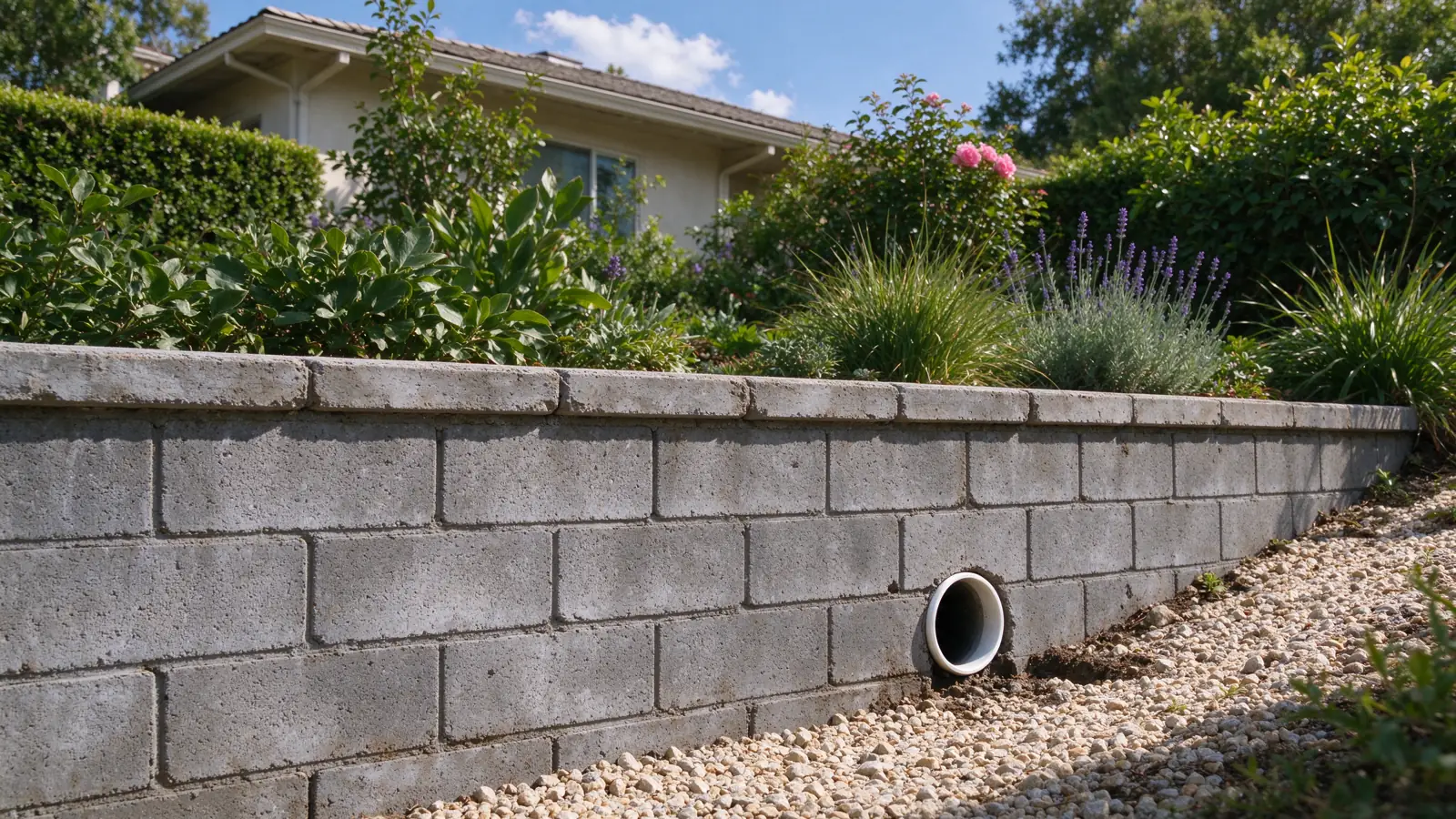
Improve an existing system with a defined purpose
Strata Los Angeles Retaining Walls manages retaining wall drainage retrofit work in the City of Los Angeles through appropriately licensed and insured contractors. A retrofit changes an existing arrangement. It should have a clear reason: a missing collection route, an inaccessible or unsuitable component, or a drainage limitation established through assessment.
The fact that a wall is old does not prove it has no drainage. A visible outlet does not prove the whole system is working. We begin with what can be observed and documented, then define the investigation needed to choose the intervention. This keeps maintenance work, drainage alteration and structural repair from being mixed into one vague promise to fix the wall.
Identify the existing collection and outlet components
Gather any drawings or construction photographs showing drain material, pipes and their route. On site, note accessible outlets, cleanouts and visible connections from a safe position. Tell us where wetness occurs and when it changes. Irrigation, runoff and subsurface water may lead to different investigation questions; one wet patch should not decide the cause.
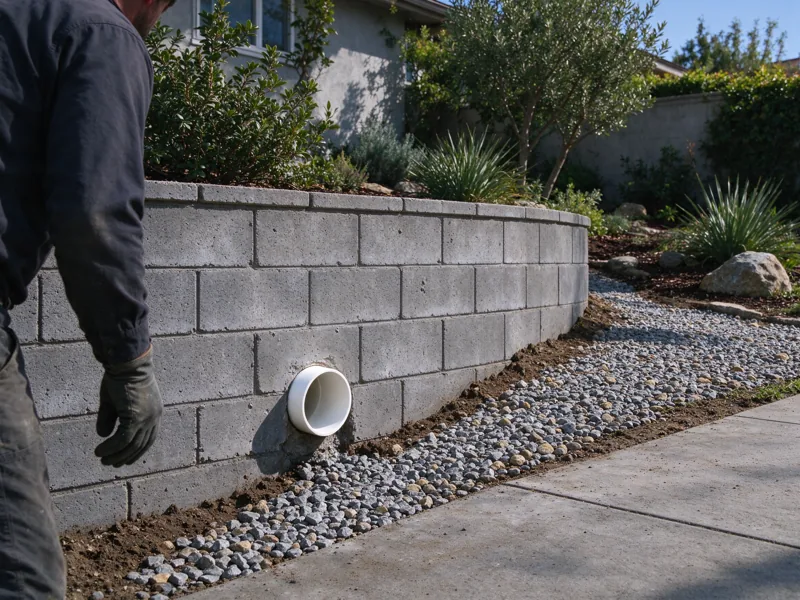
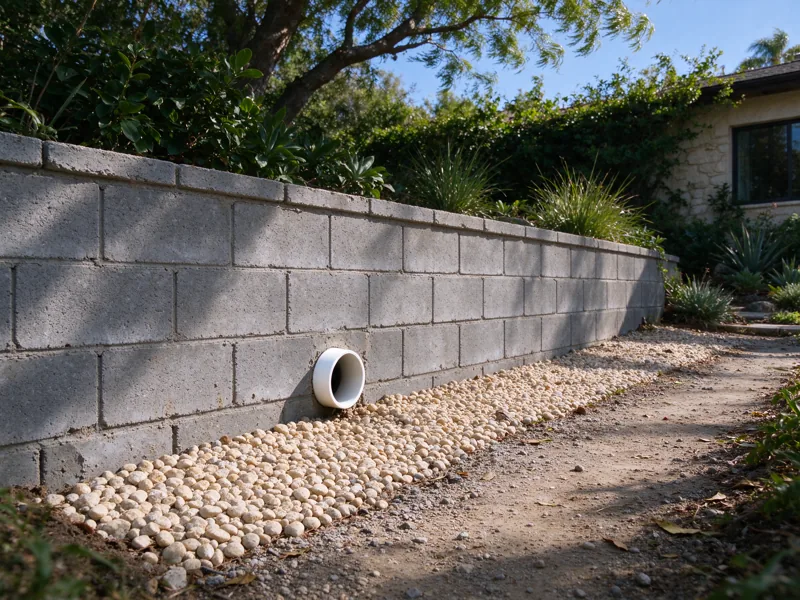
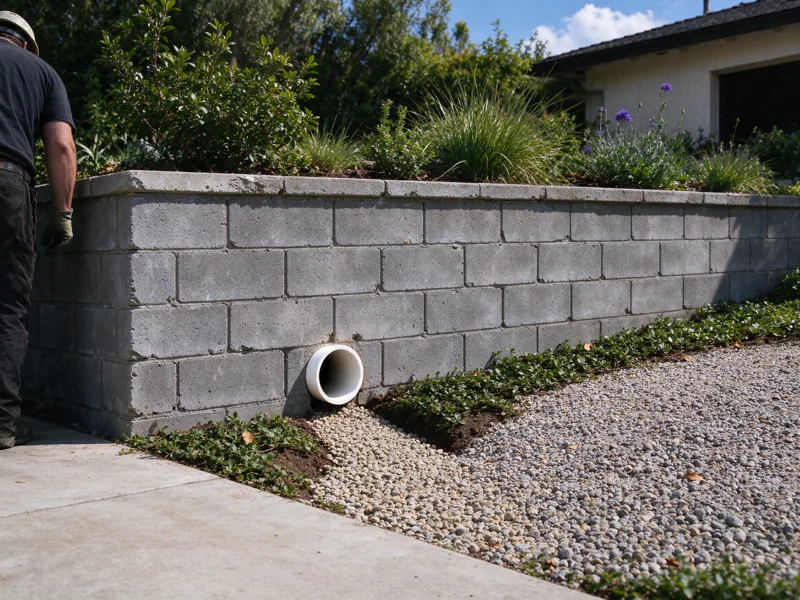
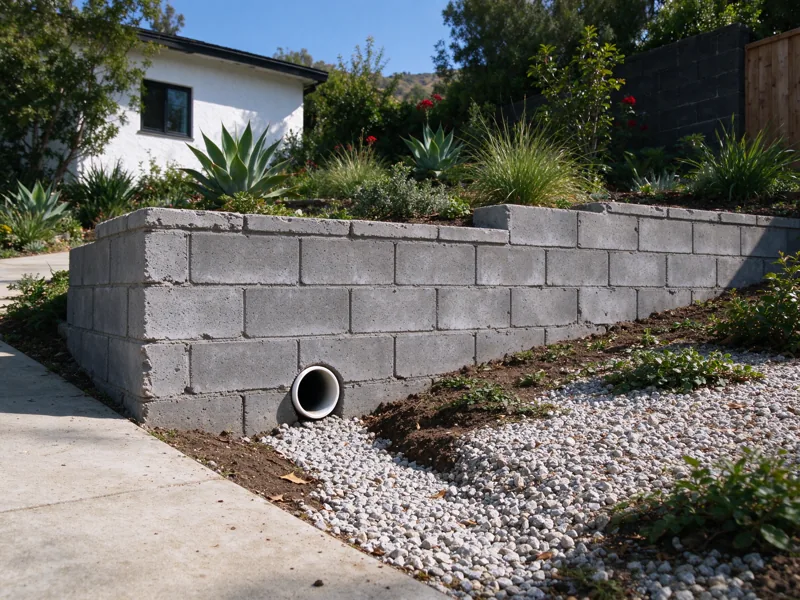
A useful first visit maps the visible pieces and the gaps in our knowledge. Where does the outlet lead? Is the collection zone accessible? Has paving or planting changed since the wall was built? The outlet guide explains why the receiving location matters just as much as the drain beside the wall. Buried conditions remain unknown until appropriately investigated.
Separate maintenance from a change to the system
An accessible obstruction may call for maintenance of a suitable existing arrangement. A missing collection layer, damaged buried connection or unsuitable discharge route may require alteration. Those are different scopes, with different access and restoration needs. The proposed work should identify which problem it is intended to address and what evidence supports that choice.
A retrofit also has limits. Installing a new drain does not establish that a wall already showing movement is structurally suitable. If the face has displaced or the supporting ground has eroded, the scope may need wall repair assessment alongside drainage work. Treating the drain as the sole answer can leave the original structural question unresolved.
Access behind the wall can determine the project
A new collection system may require excavation behind an existing wall. That space could contain a path, established planting or another improvement. The work must account for the retained ground and the remaining structure during excavation. Do not dig exploratory trenches yourself to make the retrofit easier to price.
The proposal should identify the access route and what will be removed or protected. Narrow working space can affect material handling, spoil removal and the available installation method. Our excavation guide explains why an accessible front face does not necessarily mean accessible drainage behind it. Where temporary support is needed, its design and installation responsibilities should be explicit.
Compare limited excavation with reconstruction
Sometimes a defined section can be reached without taking down the entire wall. In another setting, sufficient access may require partial reconstruction or a larger replacement scope. These options should be compared against the same drainage objective and the same requirements for retaining the surrounding ground.
Limited excavation is not automatically the least disruptive choice if it involves difficult access or repeated openings. Conversely, an inaccessible drain does not automatically justify complete demolition. The assessment needs to establish what can remain and whether the proposed route can be installed and maintained. Compare restoration, temporary works and uncertainty as well as the amount of new drain material in each proposal.
Resolve the destination rather than adding openings
Weep holes can be one component of a designed drainage arrangement. Adding openings alone does not prove that trapped water can reach them or that the discharge is acceptable. A system behind the face can still have problems with collection, filtration or conveyance. Changing the face also needs to respect the wall's construction and condition.
A suitable outlet route must be achievable across the actual property, with ownership and permission questions resolved where relevant. A pump introduces maintenance and operation requirements rather than removing those questions. See boundary-wall planning before assuming a convenient neighboring drain can be used. If the route cannot be established, that remains a feasibility issue, not an installation detail to defer.
Specify restoration and future access
A retrofit can leave a small visible change after substantial concealed work. The scope should therefore describe the disturbed surfaces, backfill and reinstatement as carefully as the drain. Identify which landscaping or paving is included and where a separate contractor's work begins. Allowances for buried conditions should have a clear authorization process.
Keep route information and photographs of concealed work where available. Record accessible maintenance points before planting hides them. Our maintenance guide helps turn that handover into a usable property record. If the eventual scope includes a new wall, review replacement planning; if drainage is being installed with new construction, use the broader retaining wall drainage service.